
DENTAL TREATMENT
ROOT CANAL TREATMENT
DENTAL TREATMENT
ROOT CANAL TREATMENT
Time
Depends on tooth
Pain Level
Mild Pain
Anesthesia
Required
Recovery
2-3 days
GENERAL INFORMATION ABOUT ROOT CANAL TREATMENT
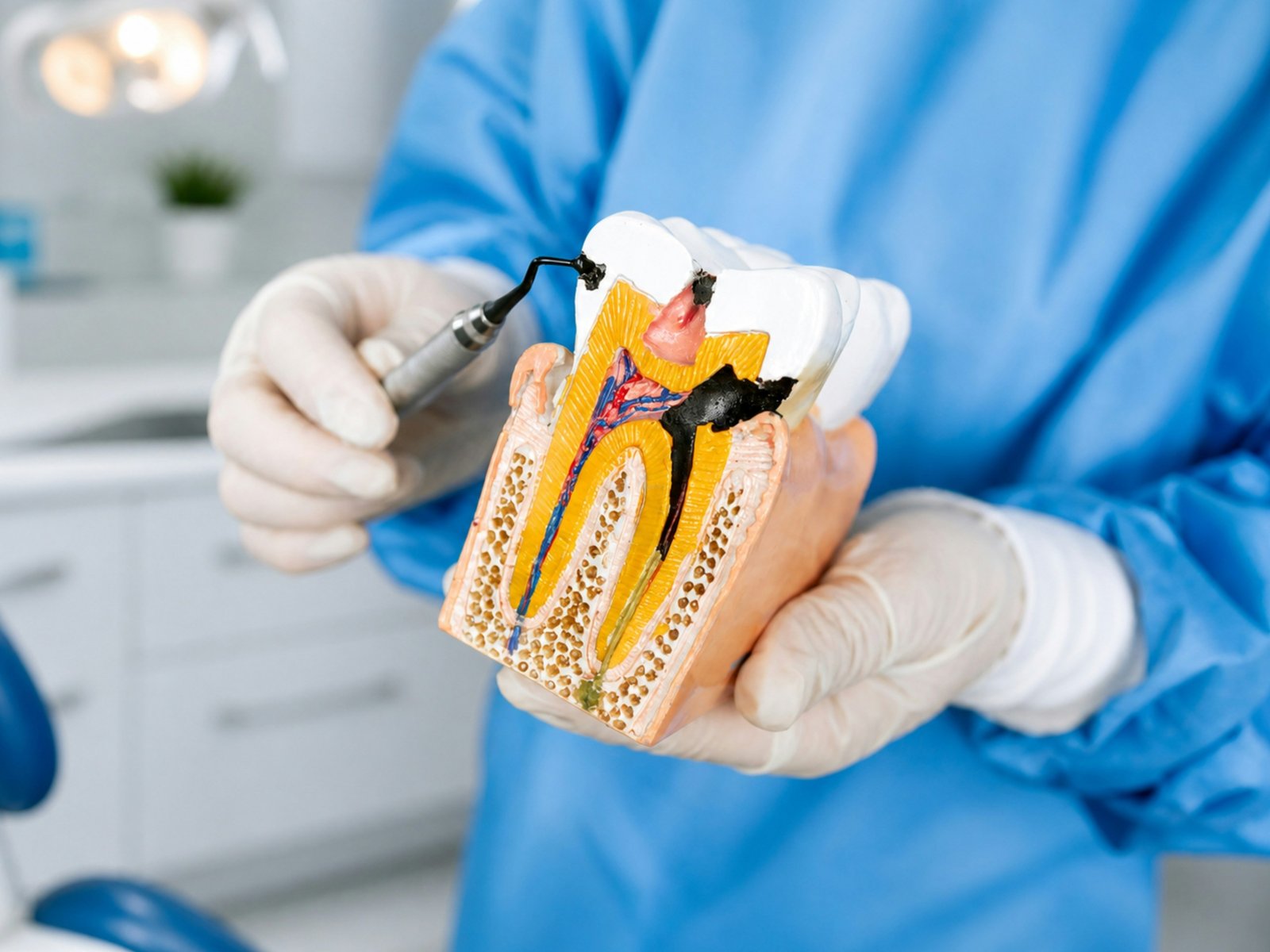
Root canal treatment, sometimes called a root filling, is a dental procedure used to treat infection or inflammation inside a tooth. It can help save a natural tooth that might otherwise need to be removed due to deep decay, cracks, trauma or infection.
Inside every tooth is a soft area called the pulp, which contains nerves and blood vessels. When the pulp becomes infected or damaged, it can cause toothache, sensitivity, swelling or discomfort. During root canal treatment, the infected or damaged pulp is carefully removed, the inside of the tooth is cleaned and disinfected, and the root canals are sealed with a filling material. At Carling Dental, root canal treatment is carefully planned according to the individual tooth being treated. The number and shape of the root canals can vary between incisors, canines, premolars and molars, so treatment can range from relatively straightforward to more complex.
ROOT CANAL TREATMENT BY TYPE
Incisors
Incisors are the front teeth used mainly for biting. They commonly have a single root canal, which can make root canal treatment relatively straightforward. Treatment can help preserve the natural appearance and function of the front tooth.
Canines
Canines are the pointed teeth located between the incisors and premolars. They usually have one long root and one main canal. Because canines play an important role in guiding the bite, preserving them can be particularly important for long-term dental function.
Pre-Molars
Premolars are located between the canines and molars and are used for tearing and grinding food. Depending on the tooth, premolars can have one or more canals, making treatment more varied than for many front teeth.
Molars
Molars are the large teeth at the back of the mouth responsible for grinding food. They typically have multiple roots and canals, making root canal treatment more complex and requiring careful cleaning and sealing of each canal.
FREQUENTLY ASKED QUESTIONS
HOW LONG DOES THE ROOT CANAL TREATMENT TYPE?
The treatment time depends on the tooth and the complexity of its root canal system. Incisors and canines may be more straightforward, while premolars and especially molars can require more time.
CAN A ROOT CANAL SAVE MY TOOTH?
In many cases, yes. The purpose of root canal treatment is to remove infection and preserve the natural tooth rather than extracting it.
WHAT HAPPENS IF I DON'T HAVE ROOT CANAL TREATMENT?
If an infected or damaged pulp is left untreated, the infection can worsen and potentially cause an abscess, swelling or further damage around the tooth. Your dentist will explain the appropriate treatment options based on your individual situation.