Have you noticed your child’s new adult teeth coming through at an angle, overlapping each other or growing behind their baby teeth? If so, you may be wondering whether this is normal or whether your child needs braces.
The good news is that crooked teeth do not always mean your child needs treatment. As children grow, their baby teeth fall out and their adult teeth begin to come through. During this time, their teeth can look uneven, crowded or a little out of place.
However, some changes are worth checking with a dentist. Knowing what to look out for can help you understand your child’s dental development and decide when to seek advice.
Why Are My Child’s Teeth Growing Crooked?
There are several reasons why children develop crooked or crowded teeth. Sometimes, it runs in the family. A child may have larger teeth or a smaller jaw, leaving less room for their adult teeth to grow into place. In other cases, their teeth may simply come through at different times or angles.
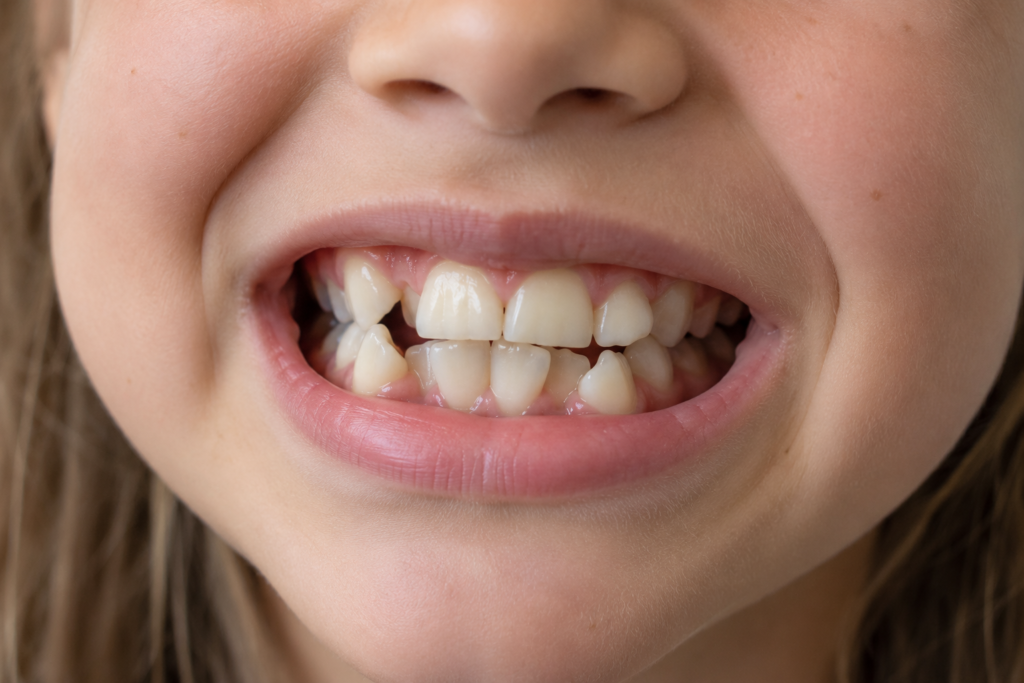
You may notice that some teeth overlap, twist slightly or sit further forward than others. Your child may also have gaps between their teeth. These changes can happen as their mouth grows, so crooked teeth do not always mean there is a problem.
If you are unsure whether your child’s teeth are developing as expected, a dentist can take a look and explain whether everything appears normal or whether the teeth need to be checked again as they grow.
Is It Normal for Adult Teeth to Grow Behind Baby Teeth?
One of the most common things parents notice is a new adult tooth coming through behind a baby tooth, particularly at the bottom of the mouth. It can look as though their child has two rows of teeth.
This can happen when the adult tooth starts to come through before the baby tooth has fallen out. Often, the baby tooth becomes loose and falls out naturally, giving the adult tooth more room to move into position.
If the baby tooth is not becoming loose, the adult tooth continues to come through in an unusual position, or your child has pain or swelling, it is best to arrange a dental appointment. Your dentist can check what is happening and advise whether anything needs to be done.
Try not to force a baby tooth out if it is not ready to fall out.
When Should You Be Concerned About Crooked Teeth?
A little unevenness can be part of growing up, but there are some signs that are worth discussing with your dentist. These include teeth that overlap significantly, front teeth that stick out noticeably, or upper and lower teeth that do not meet comfortably when your child bites.
You should also seek advice if your child has difficulty biting or chewing, or if their teeth are becoming harder to clean because they overlap. If they have ongoing pain, swelling or another dental concern, do not assume it is simply part of growing up.
It is important to remember that you cannot tell whether your child needs braces just by looking at their teeth. A dentist will consider how the teeth are growing, how the upper and lower teeth fit together and whether there is enough room for the adult teeth.
When Should a Child See an Orthodontist?
Many parents wonder whether they should wait until all their child’s adult teeth have come through before asking about braces. In some cases, treatment does not begin until most of the adult teeth are present. However, certain concerns may need to be checked earlier.
The NHS explains that braces often start to be fitted when most permanent teeth have come through, commonly at around 12 years old. The right time varies from child to child, depending on how their teeth and jaws are developing.
An early appointment does not necessarily mean your child will need braces straight away. Sometimes, the best approach is simply to keep an eye on their teeth as they grow. If you have concerns about crowding, prominent front teeth or the way your child bites, speak to your dentist about whether an orthodontic assessment would be helpful.
Does Every Child With Crooked Teeth Need Braces?
No. Some children’s teeth become more evenly positioned as their adult teeth come through, while others may need help to correct crowding or the way their teeth meet.
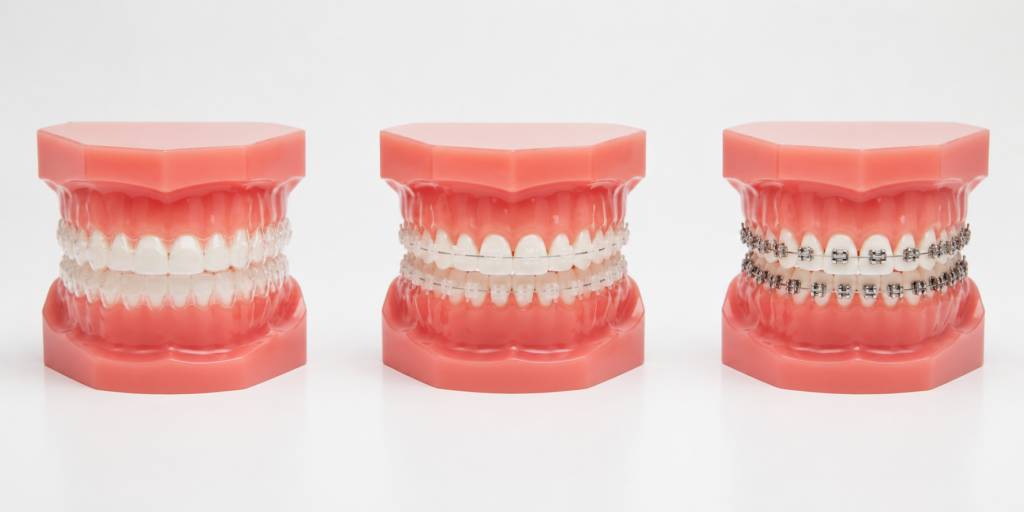
If your child does need treatment, the best option will depend on their age, the position of their teeth and the type of problem being treated. Traditional braces are one option, while clear aligners may be suitable for some patients. However, aligners are not right for every child, and some dental problems need a different approach.
Your dentist or orthodontist can explain whether treatment is needed, what the options are and when it would be best to start. There is no need to rush into treatment before your child has been properly assessed.
Can Parents Prevent Crooked Teeth?
Not all crooked teeth can be prevented. Family traits, tooth size and jaw development all play a part, and these are not things parents can control.
What you can do is help your child look after their teeth as they grow. Encourage them to brush twice a day with fluoride toothpaste suitable for their age, and supervise their brushing until they can clean their teeth properly on their own. Regular dental visits are also important because they allow your dentist to check for tooth decay and keep an eye on how the adult teeth are coming through.
If your child has crowded teeth, ask your dentist for advice on cleaning the areas that are harder to reach. It is also worth mentioning habits such as persistent thumb-sucking, particularly if you are concerned about how your child’s teeth are developing.
What Happens During a Dental Assessment?
If you book an appointment because your child’s teeth look crooked, the dentist will examine their teeth and check how the upper and lower teeth meet. They may ask when you first noticed the change and whether your child has had any pain or difficulty eating.
If further checks are needed, the dentist will explain what is appropriate. X-rays are only taken when there is a clinical reason for them. Depending on what they find, the dentist may recommend keeping an eye on your child’s teeth, arranging another appointment or seeking advice from an orthodontist.
The aim is to help you understand what is happening and whether anything needs to be done now or later.
Helping Your Child Grow Up With Healthy Teeth
It can be worrying when your child’s adult teeth come through crooked, especially if you are unsure whether their teeth will straighten as they grow. In many cases, uneven teeth are simply part of the change from baby teeth to adult teeth. In others, a dental assessment can help identify a problem that may need attention.
If you notice significant crowding, teeth coming through in an unusual position or a bite that does not seem right, it is worth asking your dentist for advice. You do not need to wait until your child is older or until all their adult teeth have appeared to raise a concern.
Getting advice can give you peace of mind and help you understand what to expect as your child grows.
Children’s Dental Care at Carling Dental, Harley Street
If you have questions about your child’s teeth or how they are developing, the team at Carling Dental can help you discuss your concerns and the next steps for their dental care. Every child develops differently, so it is important to consider their individual needs rather than compare their teeth with those of other children.
You can contact Carling Dental at 72 Harley Street, London, to enquire about an appointment.
Carling Dental
72 Harley Street, London W1G 7HG
Telephone: 020 7580 3168
Email: reception@carlingdentistry.co.uk
Visit the Carling Dental website